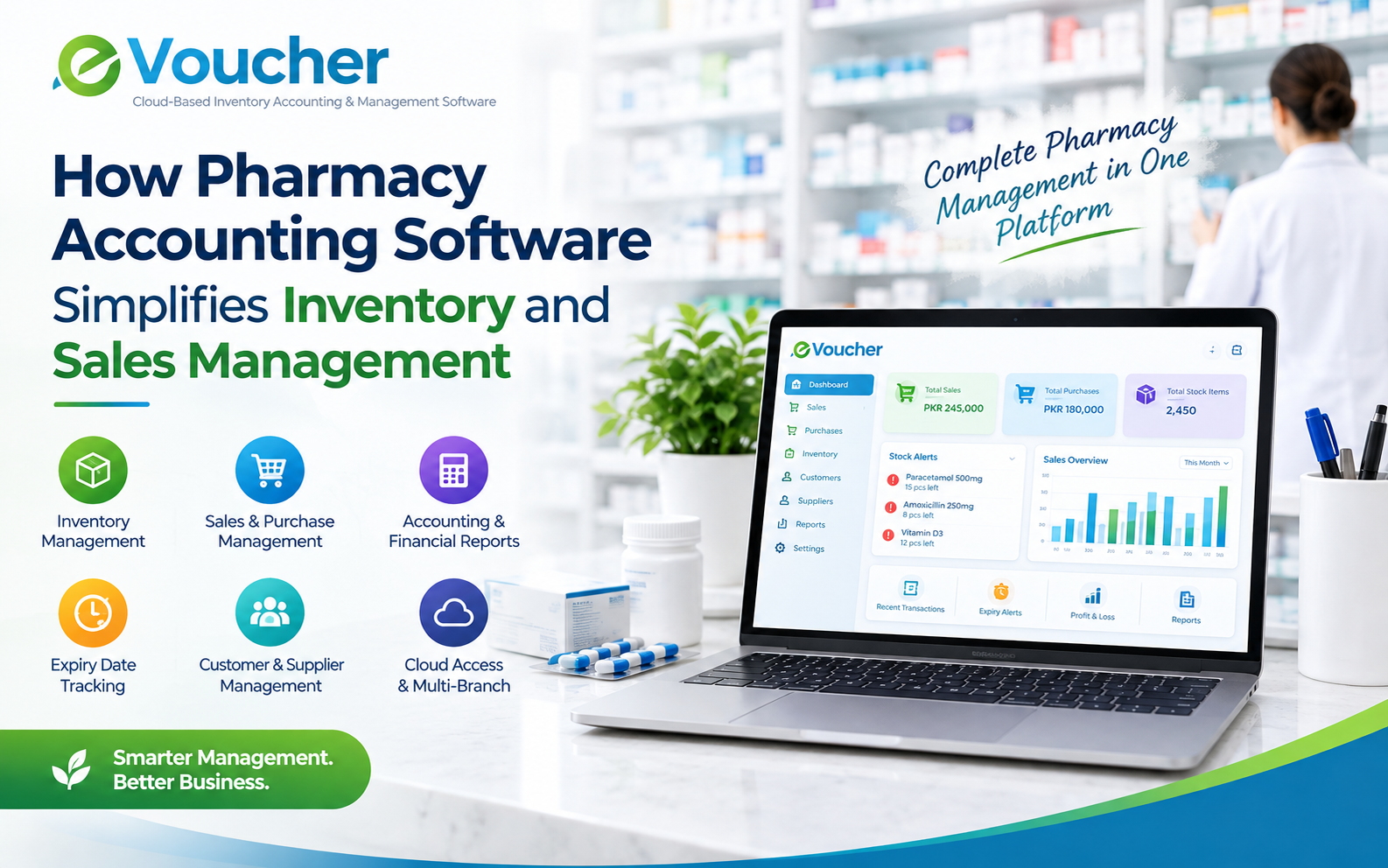
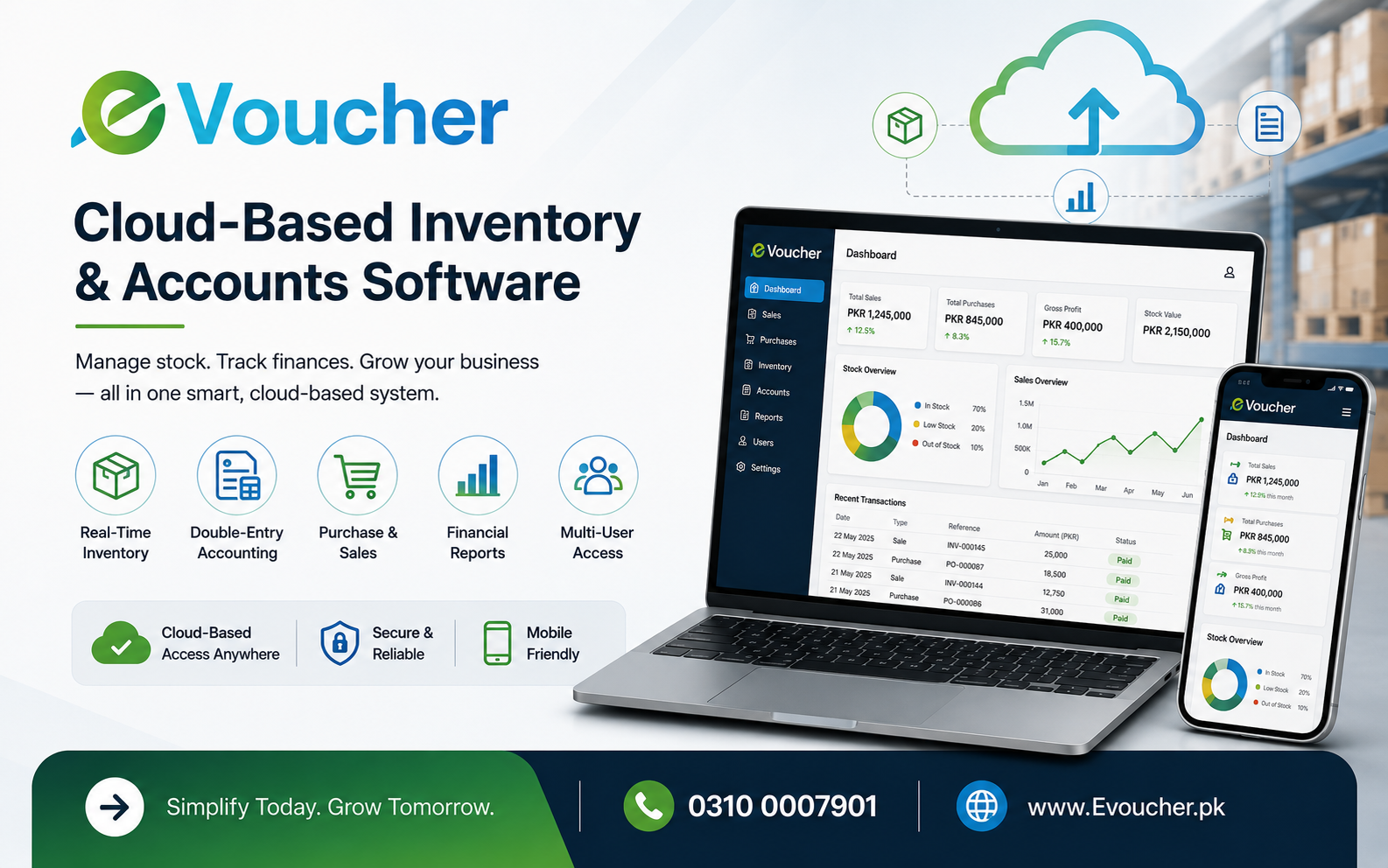
Accounting And Management Solutions Of All Pharmacies
Pharmacies handle products with different prices, quantities, suppliers, and expiry dates. Managing these details through notebooks or disconnected spreadsheets can become difficult as the business grows.
Pharmacy accounting software brings these records together, helping businesses maintain organized information and reduce repetitive data entry.
The main purpose is simple: connect pharmacy inventory, sales, and accounting so that business owners can manage daily operations more efficiently.
1. Real-Time Inventory Tracking Improves Stock Management
Inventory management is one of the most important responsibilities of a pharmacy.
A pharmacy must know how many medicines are available, which products are selling quickly, and when new stock needs to be purchased. Without accurate inventory records, employees may spend time searching for products or discover shortages only after a customer requests a medicine.
Pharmacy accounting software helps maintain updated stock records as purchases and sales are recorded.
For example, when a pharmacy sells a medicine, the system can update the available quantity. When new stock is received, the inventory record can be increased accordingly.
This makes it easier to:
-
Check stock availability
-
Monitor fast-moving medicines
-
Identify low-stock products
-
Reduce unnecessary purchases
-
Organize medicine records
-
Improve purchasing decisions
Example
Suppose a pharmacy has 100 units of a particular medicine. After recording a sale of 20 units, the software can show the remaining quantity as 80 units.
This simple process helps staff understand current stock levels without repeatedly checking shelves or updating separate records.
Accurate inventory data helps pharmacies reduce stock-related confusion and maintain better control over daily operations.
2. Expiry Date Management Helps Reduce Medicine Waste
Expiry management is a major concern for pharmacies because medicines cannot be sold after their expiry dates.
When expiry records are maintained manually, staff may overlook products approaching their expiry dates. This can result in avoidable financial losses and inefficient use of inventory.
Pharmacy management software with expiry tracking can help businesses record medicine expiry dates and identify products that require attention.
Depending on the system, pharmacies may be able to:
-
Record expiry dates during stock entry
-
Search products by expiry date
-
Identify medicines nearing expiry
-
Review older inventory
-
Plan stock rotation
-
Reduce the risk of overlooked expired products
How Does Expiry Tracking Work?
When a pharmacy receives a medicine batch, the expiry date can be entered into the inventory system. The software can then help staff review upcoming expiry dates through reports or alerts.
For example, if a medicine is approaching its expiry date, the pharmacy manager can review the stock and take appropriate action according to applicable pharmacy regulations and business procedures.
Expiry tracking does not replace professional medicine-handling procedures, but it can help staff maintain more organized inventory records.
3. Sales Management Becomes Faster and More Organized
Pharmacies process many sales transactions every day. Recording each transaction manually can take time and increase the possibility of errors.
Pharmacy accounting software simplifies sales management by allowing staff to record transactions digitally.
Depending on the available features, a pharmacy sales system may support:
-
Product selection
-
Quantity entry
-
Price calculation
-
Invoice generation
-
Sales history
-
Payment recording
-
Customer records
-
Inventory updates
When sales and inventory are connected, recording a transaction can also update stock records automatically.
How Does This Help Pharmacy Employees?
Instead of maintaining separate sales and inventory records, staff can use one system to complete the transaction and update the business records.
This can reduce duplicate data entry and make it easier to retrieve previous sales information.
For pharmacies handling frequent customer transactions, an organized sales process can help improve workflow and reduce administrative effort.
4. Purchase Management Helps Pharmacies Control Stock Costs
Pharmacies purchase medicines and healthcare products from different suppliers. Managing these purchases requires accurate records of product quantities, supplier details, prices, and payment information.
Without a proper purchase management system, pharmacy owners may struggle to understand how much they are spending on inventory.
Pharmacy accounting software helps organize purchase records and connect them with inventory data.
Key Benefits of Purchase Management
Better purchasing visibility: Review how much has been spent on medicines and other products.
Supplier record management: Maintain supplier details and purchase history.
Stock replenishment: Identify products that need to be reordered.
Purchase price tracking: Compare recorded purchase prices over time.
Improved financial records: Keep purchase transactions organized for accounting purposes.
Example
A pharmacy purchases 50 units of a medicine from a supplier. The purchase is recorded in the software, and the inventory quantity is updated.
Later, the pharmacy manager can review the purchase history to understand when the medicine was purchased, how much it cost, and how much stock remains.
This makes purchasing decisions more informed and reduces reliance on memory or scattered paperwork.
5. Accounting and Inventory Work Together
One of the biggest advantages of pharmacy accounting software is the connection between inventory and financial records.
In a manual system, employees may record sales in one place, purchases in another, and expenses in a separate accounting book. This can make it difficult to understand the pharmacy's complete financial position.
Integrated pharmacy software brings these records together.
Depending on the system, it may help track:
-
Sales revenue
-
Purchase expenses
-
Supplier payments
-
Customer receivables
-
Business expenses
-
Cash transactions
-
Profit and loss
-
Financial summaries
Why Is Integrated Accounting Useful?
When sales and purchase records are connected with accounting, pharmacy owners can spend less time collecting information from different sources.
For example, a pharmacy manager may want to know:
How much did the pharmacy sell this month, and how much was spent on purchases?
With organized digital records, the manager can review sales and purchase information more efficiently.
Integrated accounting helps turn daily pharmacy transactions into useful financial information for business decisions.
6. Profit and Loss Reports Support Better Business Decisions
Revenue alone does not show whether a pharmacy is performing well.
A pharmacy may generate substantial sales but still experience financial pressure because of high purchasing costs, operating expenses, unpaid customer balances, or inventory losses.
Profit and loss reporting helps business owners understand the difference between income and expenses.
Pharmacy accounting software can make it easier to review financial performance through organized reports.
What Can Profit and Loss Reports Show?
Depending on the software configuration, reports may include:
-
Total sales
-
Purchase expenses
-
Operating expenses
-
Gross profit
-
Net profit
-
Financial balances
-
Sales trends
These reports can help pharmacy owners identify areas that need attention.
For example, if sales are increasing but profit is not improving, the business may need to review purchasing costs, operating expenses, or product pricing.
Why Financial Reporting Matters
Regular financial reporting helps pharmacy owners make decisions based on records instead of assumptions.
It can support decisions about:
-
Stock purchasing
-
Expense control
-
Product performance
-
Business expansion
-
Cash flow planning
7. Customer and Supplier Management Becomes Easier
Pharmacies often maintain relationships with multiple suppliers and regular customers.
Managing these relationships manually can make it difficult to retrieve previous transactions or payment information.
Pharmacy management software can help organize customer and supplier records in one place.
Supplier Management
Supplier records may include:
-
Supplier name
-
Contact information
-
Purchase history
-
Payment records
-
Outstanding balances
Customer Management
Depending on the software, customer records may include:
-
Customer details
-
Purchase history
-
Outstanding balances
-
Payment records
These records can help pharmacy staff retrieve information more efficiently and maintain better business organization.
For pharmacies offering credit sales or managing supplier payments, organized records can be particularly useful.
8. Stock Alerts Help Prevent Unnecessary Shortages
A pharmacy cannot sell products that are unavailable.
Stock shortages can affect customer satisfaction and may lead customers to look elsewhere for their required medicines.
Pharmacy inventory software with stock alerts can help staff identify products that are running low.
How Stock Alerts Work
A pharmacy can define a minimum stock level for selected products. When the quantity falls below that level, the system may display an alert.
For example:
-
Minimum stock level: 20 units
-
Current stock: 15 units
-
System status: Low stock
This gives staff an opportunity to review the product and decide whether a purchase is needed.
Stock alerts are especially useful for pharmacies managing a large number of medicines and healthcare products.
The goal is to improve stock visibility so that purchasing decisions can be made before shortages become a problem.
9. Cloud-Based Pharmacy Software Supports Remote Access
Traditional pharmacy records are often stored on a single computer or in physical registers.
Cloud-based pharmacy accounting software can offer a more flexible approach by storing business data through an online system.
Depending on the provider, cloud-based software may allow authorized users to access business information from different locations and devices.
Benefits of Cloud-Based Management
-
Access business records remotely
-
Reduce dependence on physical paperwork
-
Support multi-user workflows
-
Review sales and inventory information
-
Improve collaboration between staff
-
Centralize business data
For pharmacy owners managing multiple branches or working away from the store, remote access can make business monitoring more convenient.
However, cloud software should be selected carefully. Businesses should review security practices, user permissions, backup policies, and data protection measures before adopting a system.
10. Multi-User Access Improves Team Collaboration
A pharmacy may have several employees handling different responsibilities.
One employee may manage sales, another may receive stock, and the owner may review financial reports.
A pharmacy management system with multi-user access can help different employees work within the same platform.
Depending on the software, user permissions may allow businesses to control which features each employee can access.
Example of a Multi-User Workflow
| User | Typical Responsibility |
|---|
| Pharmacy owner | Review financial reports and business performance |
| Sales employee | Record customer sales and payments |
| Inventory employee | Manage stock entries and purchases |
| Accounts employee | Review expenses and financial records |
This type of workflow can reduce duplication and help maintain more organized business records.